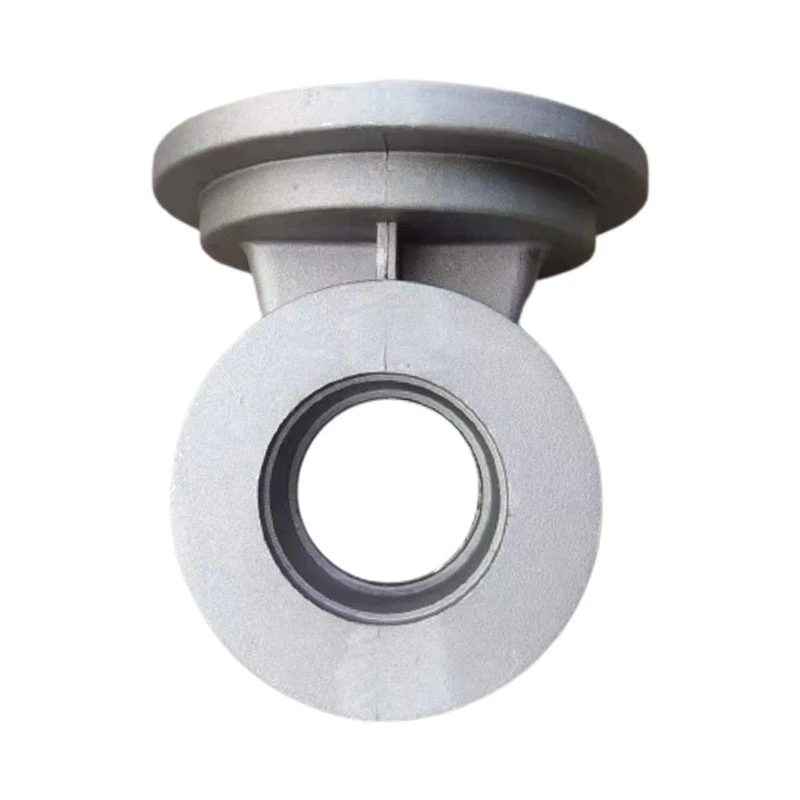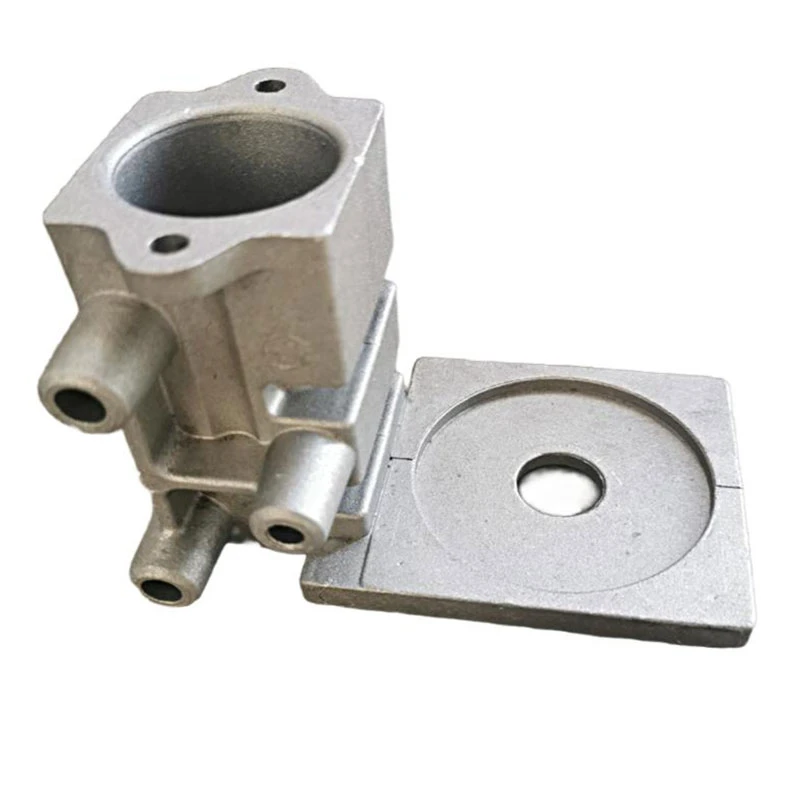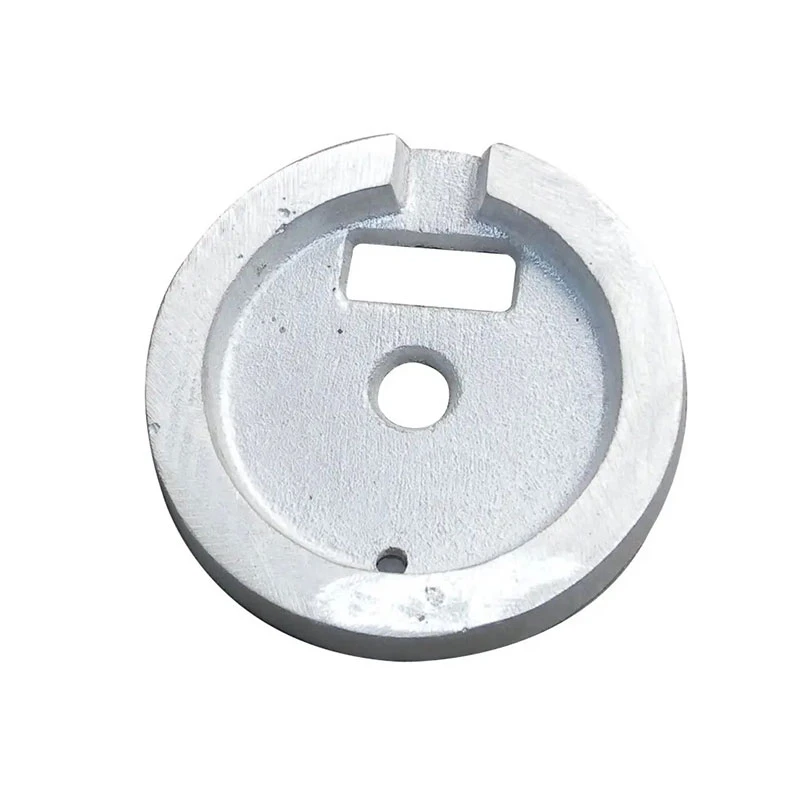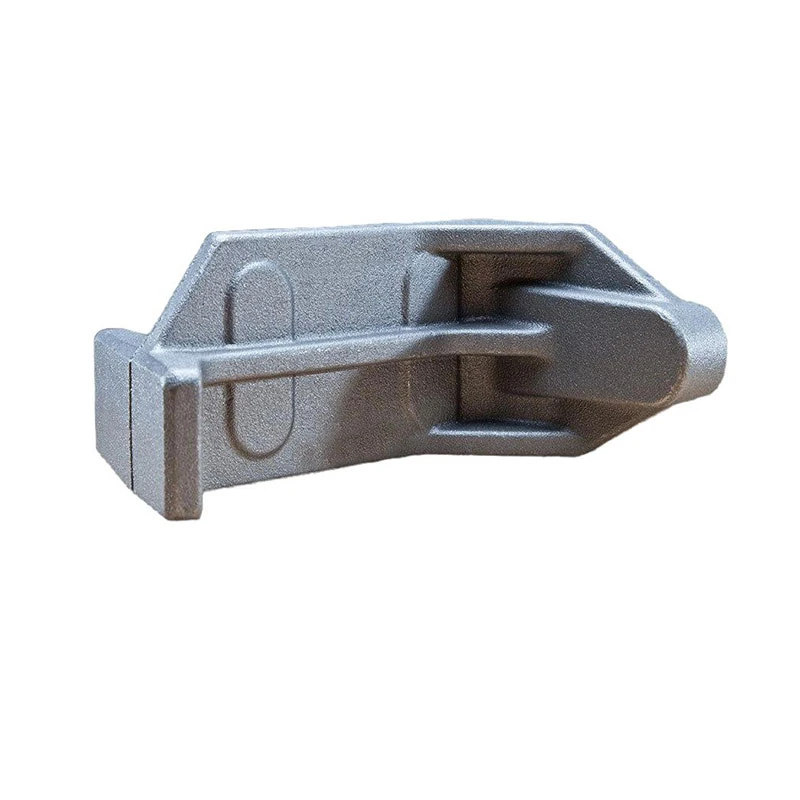



Custom Precision Casting: High-Quality Engineered Solutions
Introduction to Precision Casting for Industrial Applications
In the intricate landscape of modern manufacturing, the demand for components with exceptional dimensional accuracy, superior surface finish, and complex geometries has propelled custom precision casting to the forefront as a critical manufacturing technology. This method, often synonymous with investment casting, allows for the creation of near-net-shape components from a wide array of ferrous and non-ferrous alloys, minimizing the need for extensive secondary machining operations.
Custom precision casting is indispensable across industries requiring high-performance parts, from aerospace and automotive to medical devices and industrial machinery. Its ability to reproduce intricate designs with tight tolerances makes it a preferred choice for applications where both performance and cost-efficiency are paramount. The process ensures metallurgical integrity and consistent quality, vital for components operating under extreme conditions of temperature, pressure, and corrosion.
This article delves into the technical aspects, advantages, application scenarios, and industry trends surrounding custom precision casting, providing B2B decision-makers and engineers with comprehensive insights into this advanced manufacturing technique.
Manufacturing Process Flow for Custom Precision Casting
The journey of a component crafted through custom precision casting is a multi-step, meticulously controlled process designed to achieve superior quality and intricate detail. This manufacturing method, also known as investment casting, typically involves the following key stages:
1. Wax Pattern Creation
A master die (usually metal) is injected with wax to create a precise replica of the final part, accounting for shrinkage. Multiple patterns are often assembled onto a central wax sprue, forming a "tree" structure.
2. Ceramic Shell Building
The wax tree is repeatedly dipped into a ceramic slurry and then coated with refractory sand. This process is repeated several times, with drying periods in between, to build a robust ceramic shell around the wax patterns. The choice of refractory materials ensures thermal stability during pouring.
3. Dewaxing (Autoclave)
The ceramic shell, with the wax pattern inside, is heated in an autoclave. The wax melts and drains out, leaving a hollow ceramic mold. This step is crucial, as it leaves no parting lines, contributing to the exceptional surface finish of engineered precision casting components.
4. Shell Firing (Preheating)
The dewaxed ceramic shell is fired at high temperatures (up to 1200°C) to remove residual moisture and binder, and to enhance its strength and permeability, preparing it for molten metal. This also preheats the mold to ensure proper metal flow and minimize thermal shock.
5. Metal Pouring
Molten metal, precisely prepared to meet specific alloy compositions, is poured into the hot ceramic mold. This can occur under vacuum or controlled atmosphere to prevent oxidation and ensure material integrity.
6. Knockout and Finishing
Once the metal has cooled and solidified, the ceramic shell is broken away (knocked out) using vibratory or mechanical methods. The individual castings are then cut from the sprue and undergo various finishing operations such as grinding, blasting, and heat treatment to achieve final specifications.
Materials and Standards
Precision castings can be produced from a vast array of materials including:
- Stainless Steel: 304, 316, 316L for excellent corrosion resistance in petrochemical and marine applications.
- Carbon Steel: 1020, 1045 for structural components in general industrial machinery.
- Alloy Steel: 4140, 8620 for high strength and wear resistance in demanding environments.
- Duplex Steel: 2205, 2507 for superior corrosion resistance and strength, especially in chemical processing.
- Other Alloys: Hastelloy, Inconel for extreme temperature and corrosive conditions.
All products adhere to stringent international testing standards such as ISO 9001 for quality management, ASTM (American Society for Testing and Materials) for material specifications, ANSI (American National Standards Institute) for dimensional standards, and CE/PED (Pressure Equipment Directive) for European market access, ensuring compliance and reliability.
Typical Application Advantages
For industries like petrochemical, metallurgy, and water supply & drainage, components manufactured via investment and precision castings ltd offer distinct advantages:
- Corrosion Resistance: Utilizing materials like 316L stainless steel, castings maintain integrity and prevent material degradation in harsh chemical or saline environments, significantly extending service life.
- Energy Saving: Near-net-shape casting reduces the amount of material removed during subsequent machining, leading to less waste and lower energy consumption in manufacturing. The optimized designs possible with precision casting can also lead to more efficient fluid dynamics in pump or valve components.
- Enhanced Structural Integrity: The fine grain structure achieved through controlled solidification in precision casting contributes to superior mechanical properties and consistent performance under stress.
- Reduced Maintenance: Longer service life and robust performance translate directly into lower operational costs and reduced downtime for maintenance and replacements.
Industry Trends in Precision Casting
The landscape of investment precision casting is continually evolving, driven by technological advancements and increasing demands for higher performance components. Key trends include:
- Automation and Robotics: Integration of robotics for wax pattern assembly, shell building, and even pouring, reducing human error, improving consistency, and enhancing safety.
- Advanced Materials: Growing use of superalloys and specialized stainless steels for extreme applications in aerospace, energy, and medical sectors, requiring precise control over alloy composition and heat treatment.
- Additive Manufacturing for Tooling: 3D printing is increasingly used to produce rapid prototypes and complex wax patterns, significantly reducing lead times and costs for new product development and small batch runs.
- Simulation and Digitalization: Sophisticated casting simulation software (e.g., MAGMA, ProCAST) is employed to predict solidification patterns, identify potential defects, and optimize mold designs before physical production, saving time and resources.
- Sustainable Practices: Focus on reducing environmental impact through material recycling, energy-efficient furnaces, and minimizing waste in all stages of the casting process.
- Increased Demand for Complex Geometries: Industries are pushing the boundaries of component design, requiring castings with thinner walls, intricate internal channels, and integrated features, which precision casting excels at.
Technical Specifications and Product Parameters
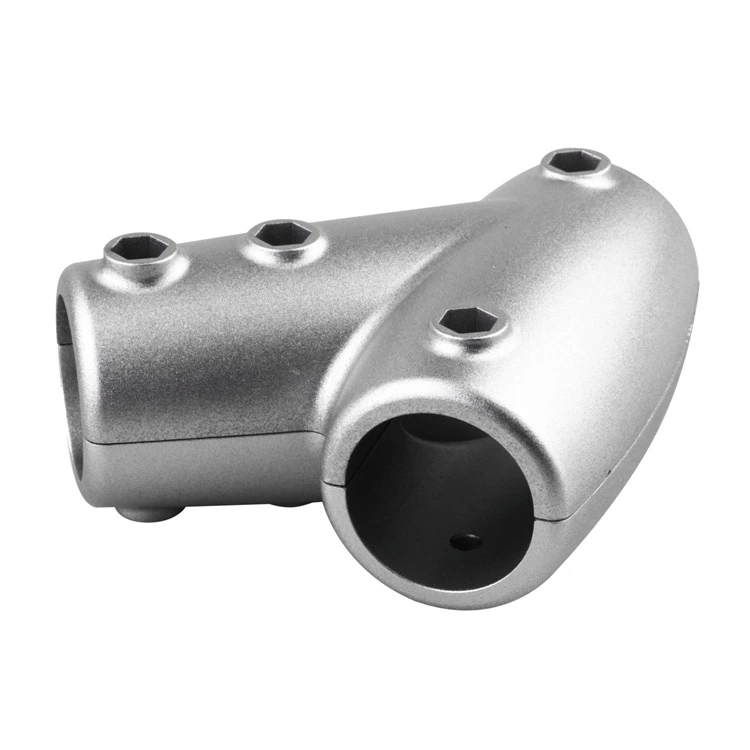
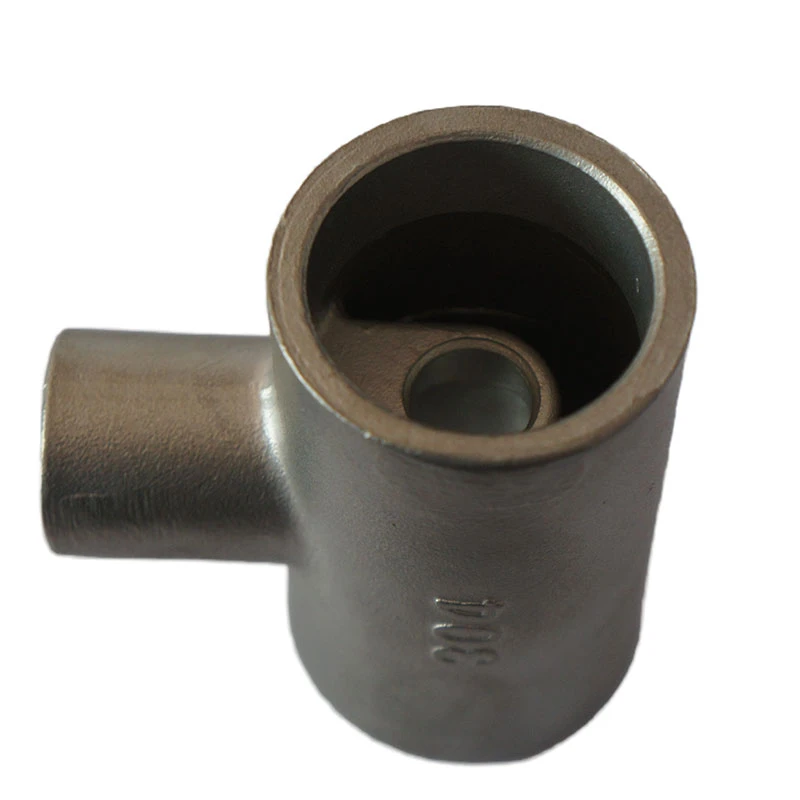
Understanding the precise technical parameters is crucial when specifying custom precision casting components. Below is an example product specification table for OEM Precision Castings Tee Joints, highlighting typical performance metrics and material characteristics.
Product Specification: OEM Precision Castings Tee Joints
| Parameter | Specification | Details / Standard |
|---|---|---|
| Product Type | OEM Precision Castings Tee Joints | Customized per client drawings and requirements |
| Material Options | Stainless Steel (304, 316, 316L), Carbon Steel (1020, 1045), Alloy Steel (4140, 8620), Duplex Steel (2205, 2507), Hastelloy, Inconel | ASTM A351, A743, A216, A995, etc. |
| Dimensional Tolerance | CT4-CT6 (ISO 8062-3) | Achievable with minimal post-machining for most features |
| Surface Finish | Ra 3.2 – 6.3 µm (125-250 RMS) standard, Ra 1.6 µm achievable with special finish | As-cast finish, can be further polished/machined |
| Weight Range | 0.01 kg to 50 kg (depending on material and geometry) | Optimized for various industrial applications |
| Heat Treatment | Annealing, Normalizing, Quenching & Tempering, Solution Treatment | To achieve desired mechanical properties (hardness, tensile strength, yield strength) |
| Testing & Inspection | Chemical Analysis, Mechanical Properties Test, NDT (UT, PT, RT, MT), Dimensional Inspection, Hydrostatic Testing | According to ISO, ASTM, ANSI, API standards |
| Service Life | Typically 10-30 years, depending on application and material selection | Enhanced by corrosion resistance and optimized design |
Comparison: Precision Casting vs. Other Manufacturing Methods
To illustrate the unique advantages of investment precision castings, it's beneficial to compare it with other common metal forming processes:
| Feature | Precision Casting | Sand Casting | Forging | CNC Machining |
|---|---|---|---|---|
| Dimensional Accuracy | Excellent (CT4-CT6) | Good (CT9-CT12) | Moderate to Good | Superior |
| Surface Finish | Very Good (Ra 3.2-6.3 µm) | Poor (Ra 12.5-25 µm) | Good | Excellent |
| Complexity of Geometry | Highly Complex (internal features, thin walls) | Moderate | Limited to simple shapes | Moderate (material removal dependent) |
| Tooling Cost | Moderate to High | Low | High | Low (for simple tools) |
| Material Waste | Low (near-net-shape) | Moderate to High | Low | High (chips) |
| Mechanical Properties | Excellent (isotropic) | Good | Superior (anisotropic grain flow) | Good (dependent on raw material) |
Application Scenarios and Technical Advantages
The versatility and precision inherent in investment and precision castings enable its application across a broad spectrum of industries, particularly where component reliability and performance are non-negotiable.
Target Industries:
- Petrochemical and Oil & Gas: Critical components for valves, pumps, fittings, and connectors requiring resistance to extreme pressures, temperatures, and corrosive media (e.g., highly resistant stainless steel or duplex steel pipe fittings and impellers).
- Power Generation: Turbine blades, nozzles, and structural components for gas and steam turbines that operate at high temperatures and demand high creep resistance.
- Automotive: Turbocharger components, transmission parts, and structural brackets where lightweighting, strength, and complex internal passages are vital.
- Aerospace: Structural airframe components, engine parts, and hydraulic system elements where tight tolerances, superior mechanical properties, and lightweight designs are paramount.
- Medical Devices: Surgical instruments, implants, and prosthetic components that require biocompatible materials, intricate shapes, and impeccable surface finishes.
- Water Supply & Drainage: Valve bodies, impellers, and pump casings designed for long-term corrosion resistance and durability in water treatment and distribution systems.
- General Industrial Machinery: Gears, levers, linkages, and housings for various industrial equipment where durability and dimensional accuracy are key.
Key Technical Advantages:
- Design Flexibility: Enables the creation of intricate, near-net-shape components with complex internal passages and thin walls that are difficult or impossible to produce with other manufacturing methods. This reduces part count and assembly time.
- Superior Surface Finish: Achieves an excellent as-cast surface finish, often reducing or eliminating the need for costly secondary machining, particularly beneficial for aesthetic or functional surfaces.
- Tight Dimensional Tolerances: Consistently produces parts with tight dimensional accuracy, minimizing the necessity for post-cast machining, and ensuring interchangeability and precise fit.
- Material Versatility: Compatible with a wide range of ferrous and non-ferrous alloys, including those difficult to machine or forge, allowing for optimal material selection based on application requirements.
- Reduced Machining Costs: Due to the near-net-shape capabilities, material waste and machining time are significantly reduced, leading to lower overall production costs for complex parts.
- Enhanced Mechanical Properties: Controlled solidification results in a fine, uniform grain structure, contributing to improved strength, ductility, and fatigue resistance compared to other casting methods.
- Consistency and Repeatability: The highly controlled process ensures high consistency from part to part, crucial for large-volume production runs and maintaining quality standards.
Vendor Comparison and Customization Solutions
Selecting the right manufacturing partner for custom precision casting is paramount. Key differentiators among vendors include not only technical capability but also adherence to quality standards, customization flexibility, and comprehensive support services.
Key Factors for Vendor Comparison:
- Certifications and Compliance: Look for ISO 9001, CE, PED, and specific industry certifications (e.g., AS9100 for aerospace, IATF 16949 for automotive). These signify a commitment to quality and regulatory adherence.
- Experience and Track Record: A vendor with decades of experience in investment precision casting and a portfolio of successful projects for reputable clients demonstrates proven expertise.
- Material Expertise: The ability to cast a wide range of standard and exotic alloys, coupled with in-house metallurgical testing, ensures the right material for your application.
- Manufacturing Capabilities: Assess the vendor's capacity for rapid prototyping, mold making, casting volumes, and secondary operations like CNC machining, heat treatment, and surface finishing.
- Quality Control & Testing: Robust QC processes, including advanced NDT (Non-Destructive Testing) like X-ray, ultrasonic, magnetic particle, and dye penetrant inspection, are critical for defect-free parts.
- Engineering Support: A vendor offering design-for-manufacturability (DFM) advice, simulation services, and collaborative engineering can significantly optimize designs and reduce costs.
- Customer Service and Logistics: Responsiveness, clear communication, efficient lead times, and reliable global logistics support are vital for smooth project execution.
Customized Solutions: Tailored to Your Needs
True partnership in custom precision casting means offering bespoke solutions that go beyond off-the-shelf products. A reputable manufacturer provides comprehensive customization, from initial concept to final delivery:
- Design & Engineering Collaboration: Working directly with your engineers to refine designs, optimize for casting, and ensure functionality. This includes CAD/CAM services, FEA (Finite Element Analysis) for stress testing, and mold flow simulation.
- Material Customization: Developing specific alloy compositions or surface treatments to meet unique environmental or mechanical requirements, often in conjunction with metallurgical experts.
- Prototyping & Pilot Runs: Offering rapid prototyping options (e.g., 3D printed wax patterns) and small pilot runs to validate designs and processes before full-scale production.
- Secondary Operations & Assembly: Providing in-house or partner capabilities for all necessary post-casting processes, including CNC machining to tight tolerances, welding, assembly, heat treatment, and various surface finishes (e.g., polishing, passivation, coating).
- Flexible Logistics & Packaging: Tailoring packaging solutions for protection during transit and offering various shipping options to meet project timelines and global distribution needs.
Application Case Studies
Real-world applications underscore the transformative potential of custom precision casting. Here are examples showcasing its impact across different industries:
Case Study 1: High-Pressure Valve Components for Petrochemical Industry
A leading petrochemical client required complex valve bodies and internal components that could withstand extreme pressures (up to 15,000 PSI) and highly corrosive media (sour gas). Traditional machining was prohibitively expensive due to intricate internal channels. By implementing engineered precision casting with Duplex Stainless Steel (ASTM A995 Grade 4A), the manufacturer achieved near-net-shape components with superior corrosion resistance and high strength. The investment casting process allowed for precise internal geometry, minimizing turbulence and maximizing flow efficiency. This resulted in a 30% reduction in machining costs and a 20% extension in component service life, demonstrating significant operational savings and enhanced safety.
Case Study 2: Medical Device Housings with Complex Geometries
A medical device manufacturer needed compact, lightweight housings for a new diagnostic instrument. The design featured intricate internal cavities for miniaturized electronics and precise mounting points, requiring exceptionally smooth surfaces to prevent contamination. Investment precision castings proved ideal, utilizing surgical-grade 316L Stainless Steel. The casting process enabled the creation of the complex internal features in a single piece, eliminating welding and reducing assembly steps. The as-cast surface finish was excellent, requiring minimal post-processing to meet stringent biocompatibility and cleanliness standards. This solution shortened lead times by 40% compared to previous multi-part assemblies and machining methods.
Case Study 3: Automotive Turbocharger Impellers
An automotive OEM sought to improve the efficiency and lifespan of turbocharger impellers, operating at high RPMs and extreme temperatures. Traditional aluminum or cast iron impellers faced limitations in strength and creep resistance. Through custom precision casting with a specialized high-nickel alloy, the manufacturer produced impellers with extremely thin, aerodynamically optimized blades. The process ensured consistent wall thickness and exceptional metallurgical integrity, crucial for rotational balance and durability. The resulting impellers demonstrated a 15% increase in efficiency and a significantly prolonged service life under demanding engine conditions, leading to improved fuel economy and reduced emissions.
Trustworthiness: FAQ, Lead Time, Warranty & Support
Frequently Asked Questions (FAQ)
Q1: What is the typical lead time for custom precision casting projects?
A: Lead times for custom precision casting vary significantly based on complexity, material, and order volume. For new projects involving tooling creation, a typical lead time might range from 8 to 12 weeks for samples and initial production. Repeat orders for established parts can be fulfilled within 4 to 6 weeks, depending on our production schedule and material availability. Expedited services may be available upon request for urgent requirements.
Q2: What types of files are needed to quote a custom casting project?
A: To provide an accurate quote for investment precision casting, we require detailed technical drawings, preferably in 2D (PDF, DWG) and 3D CAD formats (STEP, IGES, SolidWorks). Essential information includes material specifications, desired tolerances, surface finish requirements, quantity, and any special testing or certification needs. Photos of existing parts or sketches can also be helpful for initial discussions.
Q3: Can you produce parts from exotic alloys?
A: Yes, our expertise in investment and precision castings ltd extends to a wide range of exotic and superalloys, including Hastelloy, Inconel, Monel, and various proprietary alloys. We have specialized melting and pouring capabilities to handle these challenging materials, ensuring optimal metallurgical properties for demanding applications in aerospace, chemical processing, and power generation. Please provide specific alloy designations and application details for evaluation.
Q4: What are your quality control and testing procedures?
A: Our quality assurance program for engineered precision casting is comprehensive, adhering to ISO 9001 standards. It includes in-process inspections at every stage, from wax pattern integrity to final dimensional verification. We perform chemical analysis (spectrometer), mechanical testing (tensile, hardness, impact), and a full suite of NDT methods including Magnetic Particle Testing (MT), Liquid Penetrant Testing (PT), Ultrasonic Testing (UT), and Radiographic Testing (RT) as required by specifications. All testing is conducted by certified personnel, and full material traceability and inspection reports are provided with each shipment.
Lead Time & Fulfillment
We understand the critical importance of timely delivery in B2B supply chains. Our production planning is optimized for efficiency, aiming for rapid prototyping to full-scale production. Typical lead times are:
- Tooling Development: 3-5 weeks
- Sample Production & Approval: 2-4 weeks after tooling completion
- Mass Production: 4-8 weeks, depending on volume and complexity
We offer flexible fulfillment options, including partial shipments and inventory management solutions, to support just-in-time (JIT) delivery for our partners worldwide. Our logistics team coordinates with trusted carriers to ensure secure and efficient global shipping.
Warranty Commitments
All our custom precision casting products are backed by a comprehensive warranty, typically covering defects in material and workmanship for a period of 12 to 24 months from the date of shipment, or as agreed upon in the contract. We stand behind the quality and performance of our castings, ensuring they meet or exceed specified industry standards and client requirements. Details of specific warranties are provided with each project contract.
Customer Support Information
Our dedicated customer support team is available to assist you at every stage of your project. From initial inquiry and design consultation to after-sales support, we are committed to providing responsive and knowledgeable service.
- Technical Support: Access to experienced engineers for design optimization, material selection, and troubleshooting.
- Dedicated Project Managers: A single point of contact for all project-related communications.
- Prompt Response: Commitment to respond to inquiries within 24 hours.
- Global Reach: Support for international clients through our global distribution and service network.
Contact us via our website at www.hairunsourcing.com or via email for immediate assistance.
References
- ASTM International. "Standard Specifications for Steel Castings for General Industrial Use." Available at: astm.org
- ISO. "ISO 9001: Quality management systems – Requirements." Available at: iso.org
- European Committee for Standardization. "Pressure Equipment Directive (PED) 2014/68/EU." Available at: ec.europa.eu/growth/sectors/pressure-equipment/ped_en
- Investment Casting Institute. "The Investment Casting Process." Available at: investmentcasting.org
- ASM International. "ASM Handbook, Volume 15: Casting." Available at: asminternational.org
-
Guide to Anodizing Die Cast Aluminum for Industrial ExcellenceNewsApr.16,2026
-
High Quality Precision Aluminum Die Casting Components GuideNewsApr.09,2026
-
Comprehensive Guide to High Quality Aluminium Pressure Die Casting ProductsNewsApr.07,2026
-
Comprehensive Guide to Aluminium Pressure Die Casting Components and SolutionsNewsApr.04,2026
-
Comprehensive Guide to Aluminium HPDC Casting for Global SourcingNewsMar.31,2026
-
Comprehensive Guide to Precision Aluminium Die Castings and Manufacturing SolutionsNewsMar.28,2026