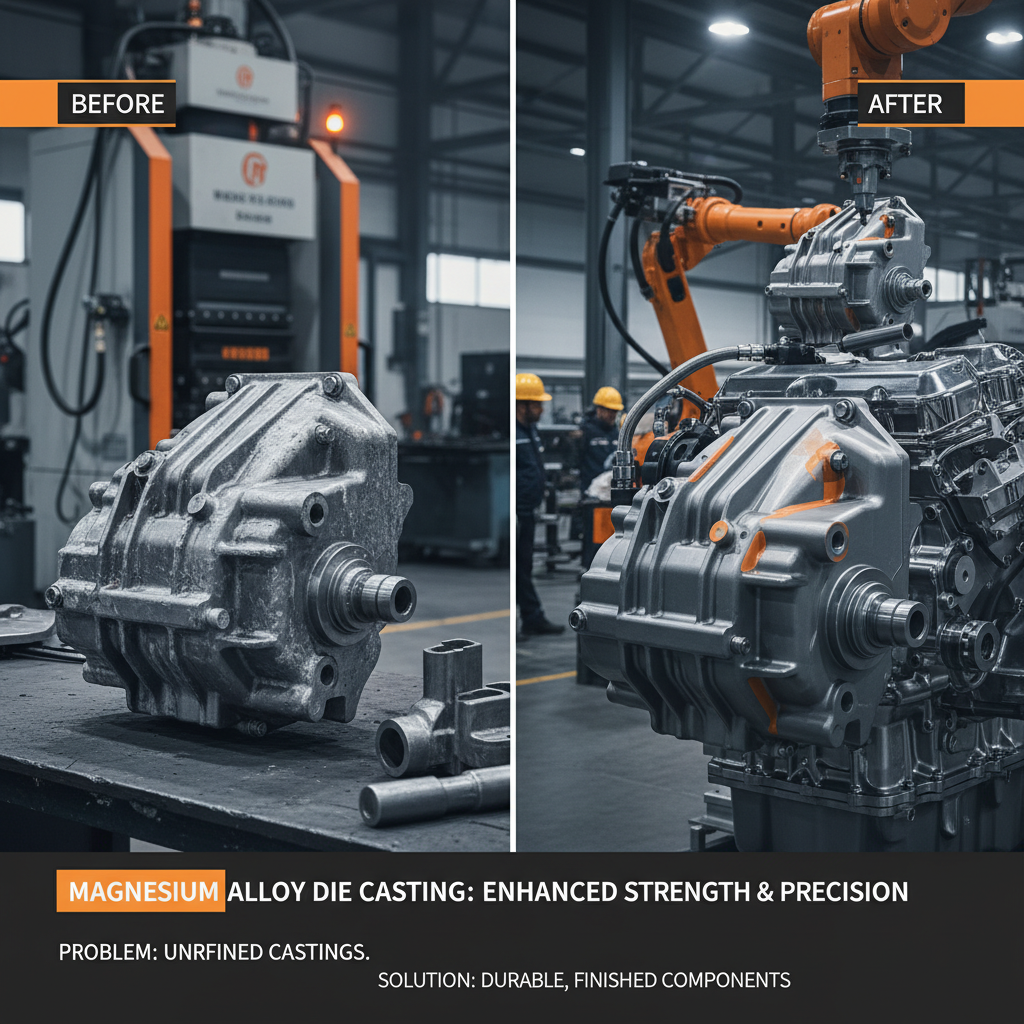
Magnesium alloy die casting. Sounds technical, right? But out here on the job site, it’s about real-world performance. It's about lighter components that don't sacrifice strength, meaning less strain on equipment and easier handling for the crew. It's about durability that holds up to the harsh conditions we face daily – rain, dust, vibration, the whole nine yards. And honestly, it’s about getting the job done efficiently, keeping costs down, and getting everyone home safe at the end of the day. That’s what I care about.
I’ve seen a lot of materials come and go, but magnesium alloys have consistently impressed me. They're not just lab numbers; they're practical solutions. We're moving towards designs that require complex geometries, and magnesium die casting allows for those intricate shapes without the hefty price tag of machining. It’s becoming increasingly essential for industries demanding both precision and lightweight construction.
For years, we’ve been relying on heavier materials that simply don’t offer the same benefits. The shift to magnesium is more than just a trend; it's a direct response to the demands of modern engineering and the need for sustainable practices. That's what makes this stuff important.
The Core Benefits of magnesium alloy die casting
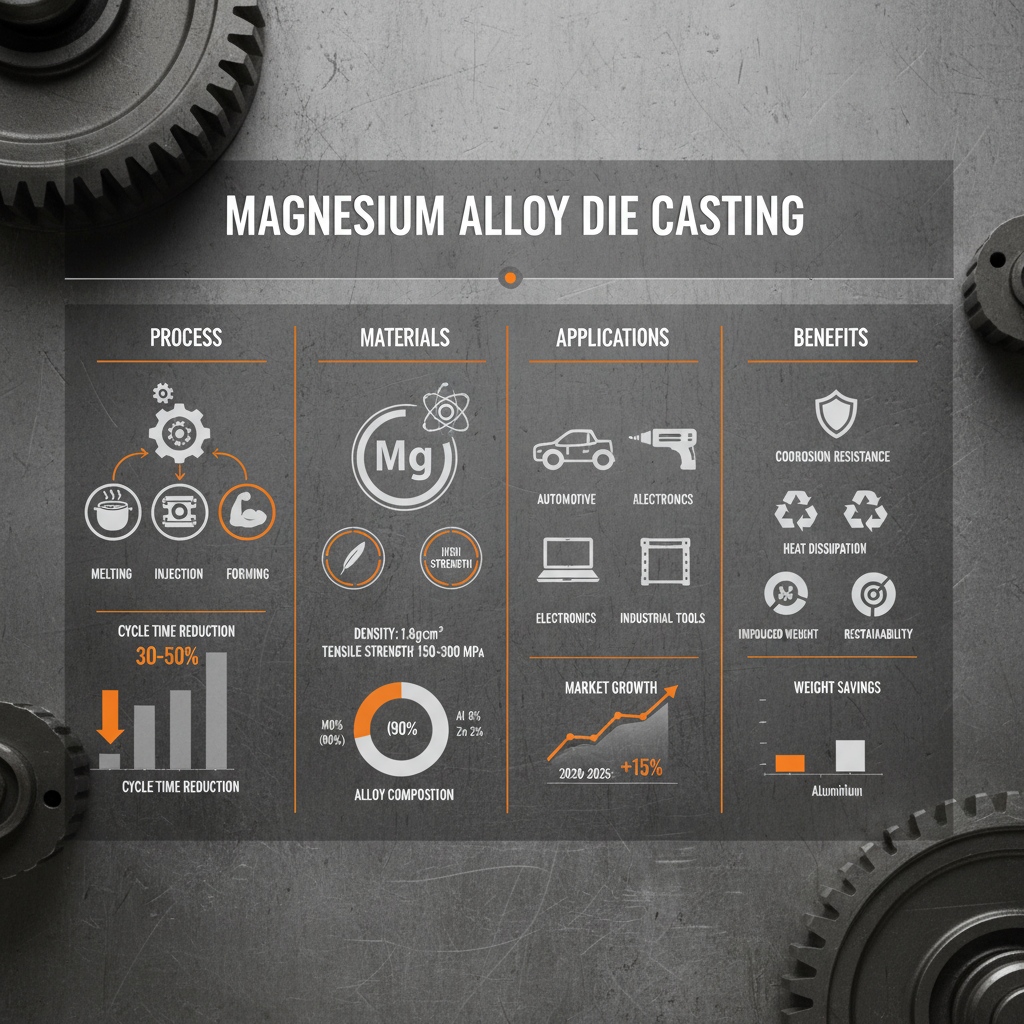
Let's talk about what makes magnesium alloy die casting stand out. First, the weight savings are significant. Lighter parts translate to reduced fuel consumption in vehicles, more efficient operation in machinery, and easier handling on the assembly line. That directly impacts the bottom line.
Secondly, the strength-to-weight ratio is impressive. It's not just about being light; it’s about being strong for its weight. This makes it ideal for structural components where durability is crucial. We need materials that can withstand the stresses of a job site, and magnesium alloys deliver.
Global Relevance and Industry Demand
Globally, the demand for lightweight materials is skyrocketing. The automotive industry is leading the charge, pushing for electric vehicles that require lighter components to maximize range. The aerospace sector is also heavily invested, seeking to reduce fuel consumption and improve aircraft performance.
But it's not just those high-profile industries. From consumer electronics to medical devices, the need for lightweight, durable materials is widespread. The UN estimates a continual increase in demand for lightweight alloys, driven by sustainability concerns and efficiency gains. According to ISO standards, the quality control in magnesium alloy die casting is getting more and more attention.
We’re seeing this demand firsthand – more requests for quotes, more engineers specifying magnesium alloys in their designs. It's a clear indication that this isn’t a fad; it’s a fundamental shift in material science.
Defining magnesium alloy die casting
Simply put, magnesium alloy die casting is a manufacturing process where molten magnesium alloy is forced into a mold cavity under high pressure. It’s different from other casting methods because of the speed and precision involved. This allows for the creation of complex shapes with tight tolerances.
It's essential for modern industry because it offers a unique combination of properties that other materials can't match. It's directly connected to the need for lighter, more fuel-efficient vehicles, more durable consumer products, and more efficient industrial equipment. It’s a building block of progress.
Think about it: we need to build things lighter and stronger, and we need to do it efficiently. magnesium alloy die casting provides a pathway to achieving those goals. It allows for mass production of complex parts, making it a cost-effective solution for many applications.
Key Characteristics for Practical Application
Let's get down to brass tacks. Durability is key. These alloys aren’t brittle; they can handle impact and vibration. Scalability is another big one – the ability to ramp up production without sacrificing quality. Cost-efficiency matters. While magnesium isn’t the cheapest material, the ability to produce complex parts quickly and with minimal machining offsets the initial cost.
Then there’s the dimensional stability. Parts hold their shape well, even under varying temperatures. This is critical in applications where precision is paramount. Finally, the corrosion resistance is improving with advancements in alloy compositions and surface treatments. We're seeing more robust coatings that extend the lifespan of magnesium components.
Magnesium Alloy Die Casting Performance Metrics
Real-World Applications Across Industries
In the automotive world, you'll find magnesium die castings in steering wheels, transmission cases, and seat frames. It helps reduce vehicle weight, improving fuel efficiency and handling. In the aerospace industry, it's used for engine components and structural parts where weight savings are critical.
Even in consumer electronics, magnesium alloys are making a splash in laptop casings and smartphone components. It provides a premium feel and improved durability. These aren't just theoretical applications; I see this stuff being used every day in projects across various sectors.
Long-Term Value and Competitive Advantages
The tangible benefits are clear: reduced costs due to lighter weight and increased efficiency, improved sustainability through material optimization, and enhanced reliability thanks to the inherent strength of the alloys. But it goes beyond that.
Using magnesium alloy die casting offers a competitive edge. It allows companies to innovate, deliver superior products, and respond quickly to market demands. It's about building trust with customers by offering quality and performance. It's also about worker safety; lighter components are easier and safer to handle on the job site.
Future Trends and Innovations in magnesium alloy die casting
We're seeing a lot of exciting developments. New alloy compositions are improving corrosion resistance and strength. Digital twins are being used to optimize die casting processes, reducing waste and improving quality control. Automation is streamlining production, making it more efficient and cost-effective.
Sustainability is also a major driver of innovation. Researchers are exploring ways to recycle magnesium alloys more effectively and reduce the environmental impact of the die casting process. The focus is on creating a closed-loop system where materials are reused and waste is minimized.
The integration of AI-powered quality control systems will likely become standard, ensuring consistent, high-quality output. And as demand for electric vehicles continues to grow, the role of magnesium alloy die casting will only become more critical.
Summary of Challenges and Potential Solutions in Magnesium Alloy Die Casting
| Challenge |
Severity (1-10) |
Potential Solution |
Implementation Cost (Estimate) |
| Corrosion Resistance |
7 |
Advanced Surface Treatments & Alloy Development |
$50,000 - $200,000 |
| High Tooling Costs |
6 |
Optimized Die Design & Material Selection |
$30,000 - $100,000 |
| Porosity Issues |
5 |
Improved Process Control & Vacuum Die Casting |
$40,000 - $150,000 |
| Limited Design Flexibility |
4 |
Utilizing Semi-Solid Die Casting Techniques |
$60,000 - $250,000 |
| Recycling Challenges |
8 |
Developing Dedicated Recycling Infrastructure |
$100,000 - $500,000 |
| Skilled Labor Shortage |
9 |
Training Programs & Automation Implementation |
$20,000 - $80,000 (ongoing) |
FAQS
Magnesium alloys offer a significantly better strength-to-weight ratio than aluminum, making them ideal for applications where weight reduction is critical. They also typically exhibit better damping characteristics, reducing vibration and noise. While aluminum may be cheaper upfront, the overall cost benefits of magnesium can be substantial due to reduced material usage and improved performance. Proper surface treatments mitigate corrosion concerns.
The die casting process, with its high injection pressures and rapid cooling rates, can influence the microstructure of magnesium alloys. This can lead to improved mechanical properties like tensile strength and yield strength. However, it can also introduce porosity if not carefully controlled. Utilizing techniques like vacuum die casting and optimizing process parameters are crucial for achieving desired material properties.
The automotive industry is a major driver, utilizing magnesium for components like steering wheels, transmission housings, and seat frames to reduce vehicle weight. The aerospace sector also employs magnesium alloys for engine components and structural parts. Consumer electronics, medical devices, and power tools are also seeing increased adoption due to magnesium’s lightweight and durable properties.
Magnesium alloys are susceptible to corrosion, particularly in chloride-rich environments. However, this can be effectively addressed through surface treatments such as powder coating, anodizing, and chrome plating. Alloy selection is also key; certain alloys offer improved corrosion resistance. Implementing proper design considerations to avoid galvanic corrosion is also important.
Lead times can vary significantly depending on the complexity of the part, the size of the production run, and the availability of tooling. Generally, expect a lead time of 4-8 weeks for tooling fabrication, followed by 2-4 weeks for production. Working with a reputable supplier like magnesium alloy die casting can help streamline the process and minimize lead times.
While magnesium alloy typically has a higher base material cost than zinc or aluminum, the overall cost can be competitive or even lower depending on the application. Magnesium’s lighter weight often results in less material usage, and its ability to cast thinner walls can reduce material costs. The complex geometries it allows, reducing machining needs, are also cost-saving. It’s essential to conduct a total cost analysis considering all factors.
Conclusion
Magnesium alloy die casting isn’t just a material choice; it's a strategic advantage. From reducing weight and improving efficiency to enhancing durability and enabling complex designs, it offers a unique set of benefits for a wide range of industries. It’s a testament to how material science drives innovation and allows us to build better, more sustainable products.
Looking ahead, the continued development of new alloys, optimized casting processes, and advanced surface treatments will further expand the possibilities of magnesium alloy die casting. If you're looking for a lightweight, high-performance material solution, I encourage you to explore the potential of magnesium. Visit our website at www.hairunsourcing.com to learn more about how we can help you bring your projects to life.