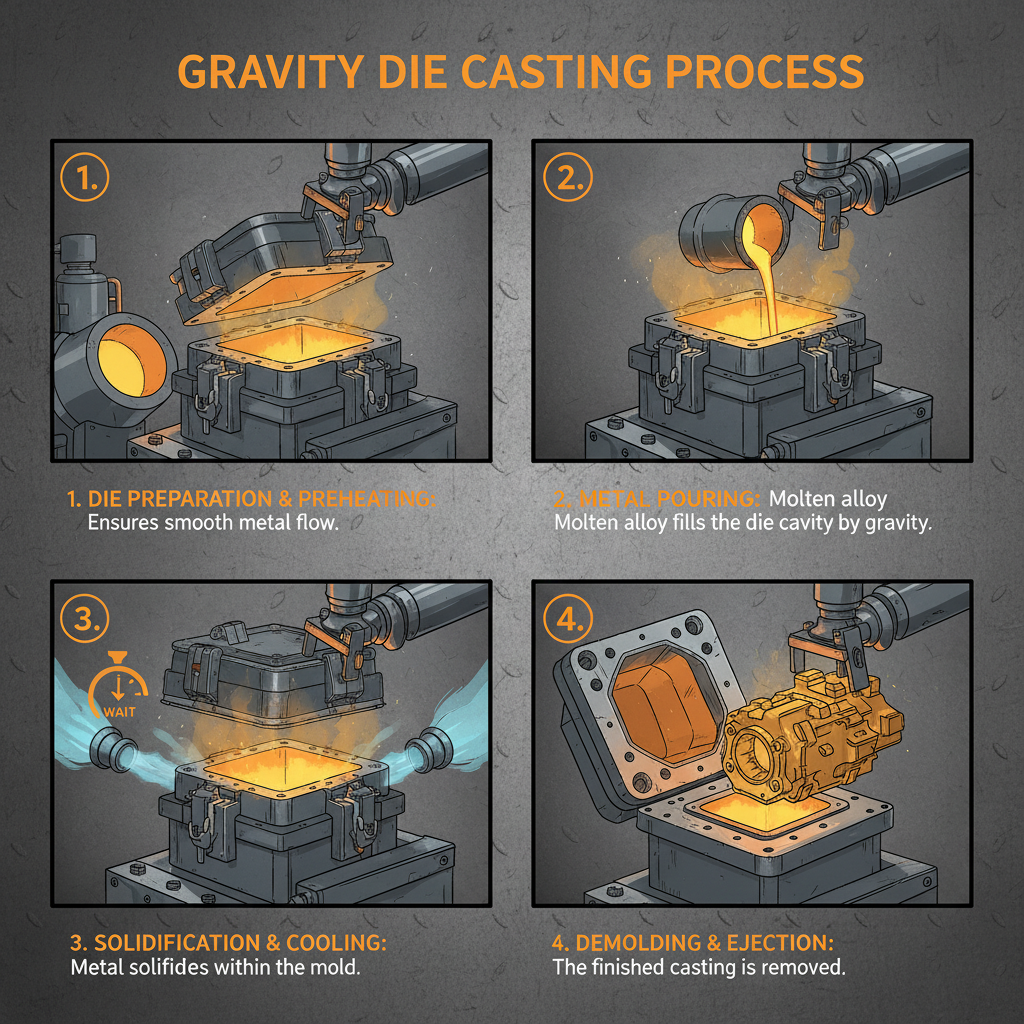
In the high-stakes world of precision manufacturing, achieving a flawless casting is often the ultimate goal, yet total elimination of internal voids is physically and economically impractical. Understanding acceptable porosity in castings is critical for engineers and procurement specialists to balance structural integrity with cost-effectiveness, ensuring that components meet safety standards without unnecessary scrap rates.
The challenge lies in the distinction between "gas porosity" and "shrinkage porosity," both of which can influence the mechanical properties of a part. By defining a clear threshold for acceptable porosity in castings, manufacturers can implement standardized inspection protocols using X-ray or ultrasonic testing, ensuring that every Die Casting or Precision Casting part delivered to the client is fit for its intended purpose.
Ultimately, mastering the nuances of porosity management allows for greater innovation in lightweighting and complex geometries. When a company can confidently quantify acceptable porosity in castings, they reduce the risk of premature component failure while optimizing the production cycle for Sand Casting and Stamping Parts across global supply chains.
Global Standards for Acceptable Porosity in Castings
On a global scale, the determination of acceptable porosity in castings is governed by rigorous standards such as ASTM and ISO. These frameworks provide a baseline for quality assurance, ensuring that a casting produced in one region meets the structural requirements of another. Without these shared benchmarks, the international trade of automotive and aerospace components would face immense hurdles regarding safety and liability.
The industry challenge often stems from the conflict between "theoretical perfection" and "industrial reality." While a zero-porosity part is ideal, the energy and cost required to achieve it would make most products commercially unviable. Therefore, global standards focus on the "critical zone" of a part—identifying areas where porosity is permissible and where it is strictly forbidden to prevent catastrophic failure.
Technical Definitions of Casting Voids
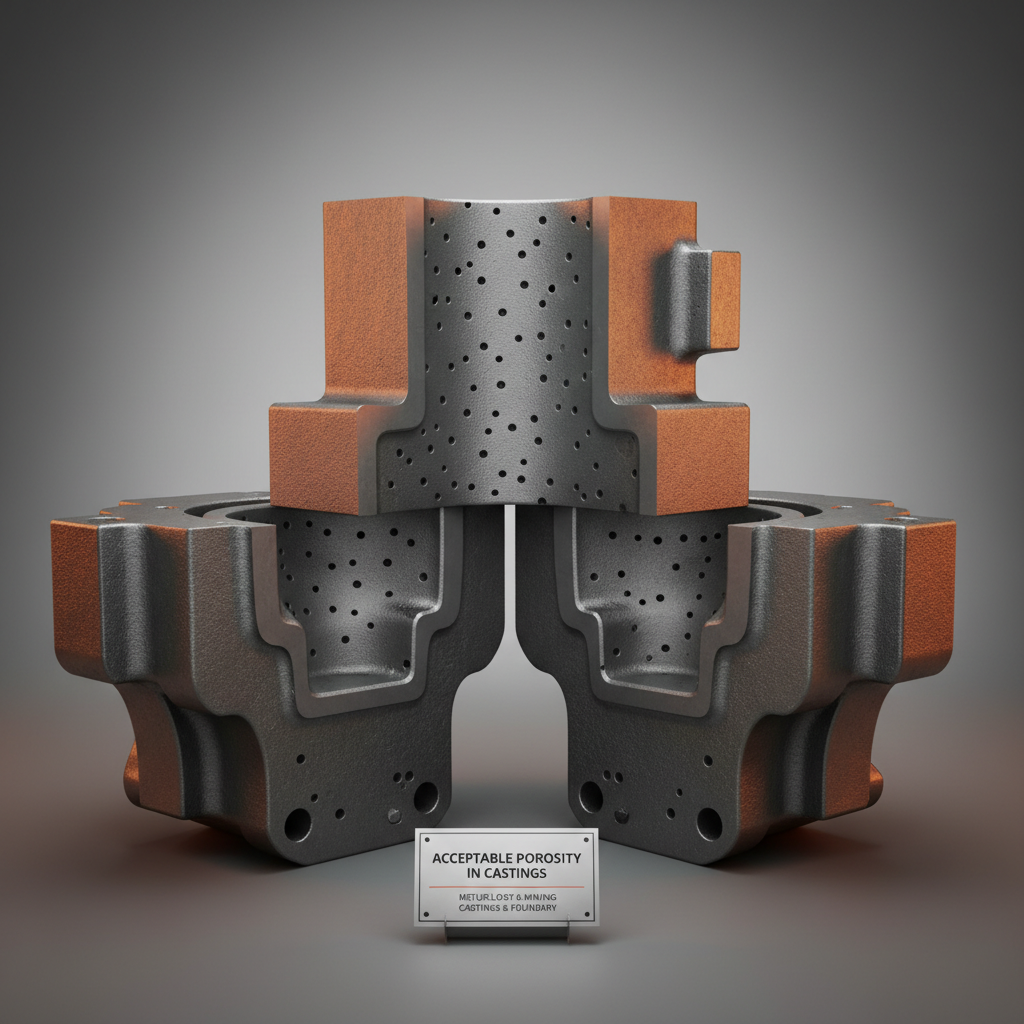
To understand acceptable porosity in castings, one must first distinguish between the types of voids encountered during the cooling process. Gas porosity typically appears as small, spherical bubbles caused by trapped air or dissolved gases in the molten metal. In contrast, shrinkage porosity is more irregular and occurs when the metal contracts during solidification, leaving behind jagged gaps.
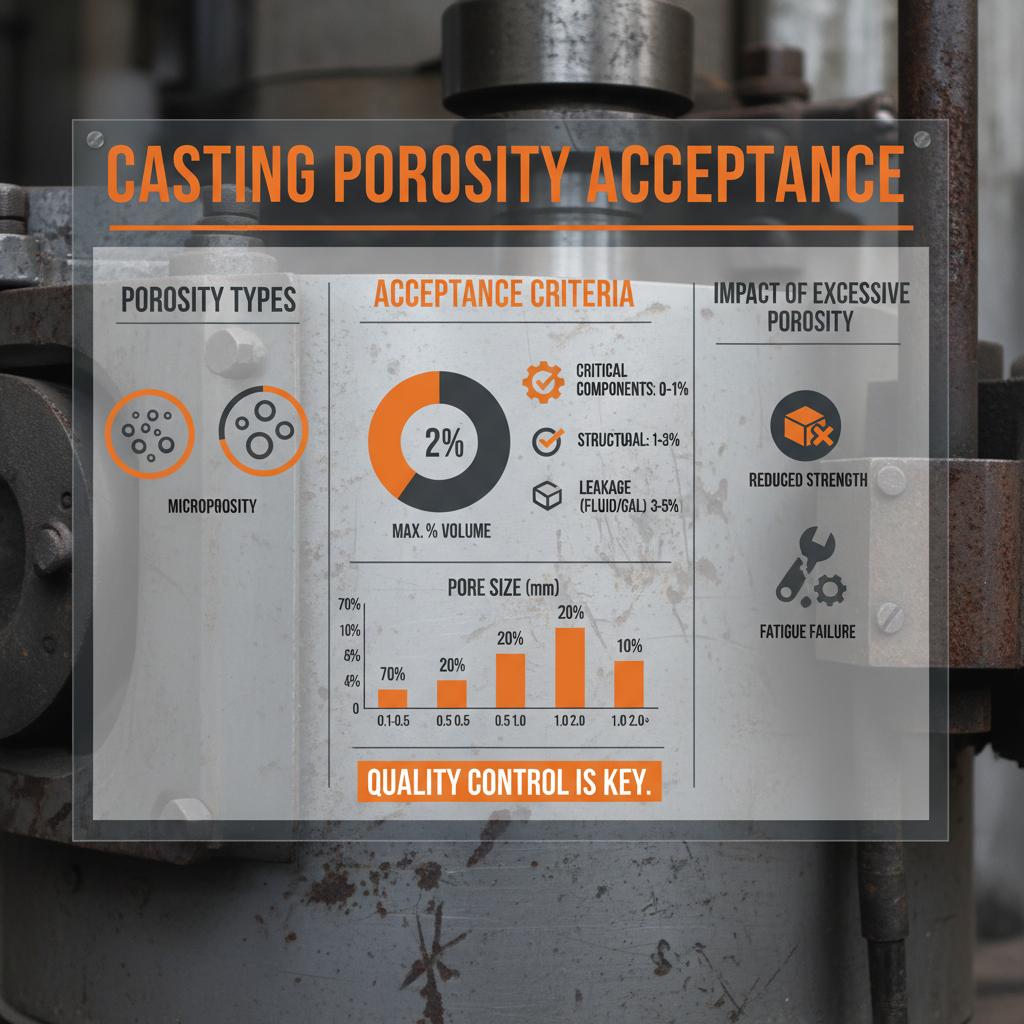
Defining "acceptable" means establishing a limit on the size, distribution, and location of these voids. For instance, a small cluster of dispersed gas pores in a non-load-bearing section of a Die Casting part might be deemed acceptable, whereas a single shrinkage cavity in a high-stress joint would lead to immediate rejection.
Modern industry views these voids not just as defects, but as indicators of the casting process health. By analyzing the pattern of porosity, engineers can backtrack to identify issues in the mold design, pour temperature, or degassing procedures, effectively using the concept of acceptable porosity in castings as a diagnostic tool for process optimization.
Core Factors Influencing Porosity Thresholds
The first major factor in determining acceptable porosity in castings is the mechanical load the part will undergo. High-pressure applications, such as those found in hydraulic manifolds or engine blocks, require extremely low porosity thresholds to prevent leaks and fatigue cracking under cyclical stress.
Material selection also plays a pivotal role. For example, aluminum Die Castings are naturally more prone to gas porosity than steel Sand Castings. Consequently, the criteria for acceptable porosity in castings are adjusted based on the alloy's fluidity and the specific casting method employed to ensure a fair and realistic quality benchmark.
Finally, the secondary processing—such as precision machining—influences the threshold. If a casting is to be heavily machined, internal porosity may be exposed, leading to "surface porosity" which can compromise the aesthetic finish or the seal of a mating surface. This makes the internal acceptable porosity in castings a critical precursor to machining success.
Industry-Specific Application and Tolerance
Different sectors apply the logic of acceptable porosity in castings with varying degrees of strictness. In the automotive sector, where mass production is key, tolerances are balanced to allow for high throughput while maintaining safety. Conversely, in the aerospace industry, the margin for error is nearly zero, and porosity limits are dictated by rigorous flight-safety certifications.
In heavy industrial machinery, such as mining equipment, the focus is often on the bulk strength of the part. Here, larger, isolated pores may be considered acceptable as long as they do not coalesce into a failure path, allowing for more cost-effective Sand Casting processes.
Comparative Impact of Acceptable Porosity in Castings by Industry
Long-Term Value of Controlled Porosity
The primary advantage of defining acceptable porosity in castings is the significant reduction in waste. By avoiding the pursuit of an impossible "zero-pore" state, companies can drastically reduce their scrap rates, leading to lower production costs and a smaller environmental footprint through reduced energy consumption.
Beyond cost, there is the element of trust and reliability. When a manufacturer provides a certified report on the porosity levels of their Precision Castings, they are offering a guarantee of structural integrity. This transparency fosters stronger partnerships between suppliers and OEMs, as the engineering teams can design parts with precise safety factors based on known porosity limits.
Future Innovations in Porosity Reduction
The landscape of acceptable porosity in castings is being transformed by the digital revolution. Simulation software now allows engineers to predict porosity formation before a single drop of metal is poured. By optimizing gate locations and cooling rates in a virtual environment, the "acceptable" range is being shifted toward higher quality with less effort.
Furthermore, the integration of Vacuum Die Casting and advanced degassing technologies is pushing the boundaries of what is possible. By removing gases from the melt more effectively, manufacturers can produce parts that meet the strictest aerospace standards while utilizing more efficient, automated production lines.
We are also seeing a move toward AI-driven inspection. Automated X-ray analysis using machine learning can now identify and quantify porosity in real-time, removing human subjectivity from the determination of acceptable porosity in castings and ensuring 100% consistency across massive production batches.
Overcoming Challenges in Porosity Inspection
One of the most persistent challenges in managing acceptable porosity in castings is the "hidden" nature of the defect. Traditional visual inspections are useless for internal voids, necessitating the use of Non-Destructive Testing (NDT). However, NDT can be expensive and time-consuming, often creating a bottleneck in the quality control process.
To overcome this, many forward-thinking foundries are implementing a "statistical sampling" approach combined with high-resolution CT scanning. By correlating the porosity of a few sample pieces with the process parameters of the entire batch, they can maintain a high confidence level in the acceptable porosity in castings without scanning every single part.
Another solution involves the use of "sacrificial" witness coupons—small cast pieces attached to the main part. By inspecting the coupon, the technician can infer the porosity levels of the main component, streamlining the workflow and reducing the cost of quality assurance.
Analysis of Porosity Inspection Methods and Effectiveness
| Inspection Method |
Detection Accuracy |
Cost per Unit |
Impact on Throughput |
| X-Ray Radiography |
High |
Medium |
Moderate Slowdown |
| Ultrasonic Testing |
Medium |
Low |
Fast |
| CT Scanning |
Ultra-High |
High |
Significant Slowdown |
| Dye Penetrant |
Surface Only |
Very Low |
Very Fast |
| Hydrostatic Testing |
Leak-based |
Medium |
Moderate |
| Visual Inspection |
Low |
Zero |
Instant |
FAQS
It is typically determined through a collaboration between the design engineer and the foundry. They analyze the part's stress map to identify "critical zones." Limits are then set based on industry standards (like ASTM) and the specific application—for example, a pressure-tight requirement will have much stricter porosity limits than a decorative housing.
Technically, removing 100% of porosity is nearly impossible in high-volume die casting due to the nature of gas entrapment. However, by using vacuum-assisted casting and optimized venting, manufacturers can reduce it to a level where it fits within the "acceptable porosity in castings" threshold for even the most demanding applications.
If porosity exceeds the agreed-upon limits, the part is typically rejected. Depending on the location of the voids, it may be scrapped entirely or, in some cases, repaired via welding and re-machining. If the issue is systemic, the foundry must adjust the pour temperature or mold design to bring the parts back within the acceptable range.
Not necessarily. Small, isolated, and spherical gas pores often have a negligible effect on the overall strength of a part. However, interconnected shrinkage porosity or voids located at a high-stress fillet can act as "stress concentrators," significantly increasing the risk of fatigue failure or cracking.
X-ray is the gold standard, but not the only way. Ultrasonic testing is effective for thicker sections, and CT scanning provides 3D mapping for complex geometries. For simple leak-testing, hydrostatic pressure tests can confirm if porosity has created a path through the wall, though they don't map the exact location of the voids.
Different metals have different shrinkage rates and gas solubilities. Aluminum is highly prone to hydrogen porosity, meaning the "acceptable" range is often defined differently than it would be for iron or steel. The foundry adjusts the thresholds to reflect the inherent metallurgical behavior of the chosen alloy.
Conclusion
Managing acceptable porosity in castings is a delicate balancing act between metallurgical perfection and industrial efficiency. By clearly defining these thresholds through global standards and advanced NDT inspection, manufacturers can ensure the structural integrity of Die Castings and Precision Castings while keeping production costs sustainable. The key is not the total absence of voids, but the strategic control of their size and location to prevent failure.
Looking forward, the integration of AI-driven simulations and real-time monitoring will likely shrink the gap between theoretical design and actual casting quality. For businesses seeking to optimize their supply chain, partnering with a foundry that prioritizes transparent porosity management is essential for long-term reliability and innovation. Visit our website for more expert insights: www.hairunsourcing.com