


Selecting the right manufacturing process often comes down to a balance between geometric complexity and production volume. When engineers evaluate the viability of products made from die casting, they are typically looking for a solution that eliminates extensive secondary machining while maintaining tight dimensional tolerances across thousands of units.
Unlike sand casting, which is ideal for massive components or low-volume prototypes, die casting utilizes pressurized molten metal forced into steel molds. This fundamental shift in physics allows for thinner walls, smoother surface finishes, and a level of repeatability that is essential for modern automotive and electronic housing applications.
This analysis explores the technical drivers behind die casting selection, the materials that define its performance, and how to navigate the trade-offs between different casting methodologies to ensure structural integrity and cost-efficiency.


The core of die casting lies in the application of extreme pressure to force molten alloy into a reusable steel die. This process ensures that the metal fills every intricate detail of the mold cavity, allowing for complex geometries that would be impossible or prohibitively expensive to machine from a solid block.
By utilizing rapid cooling cycles and high-velocity injection, manufacturers can achieve incredibly fast cycle times. This makes the process the gold standard for mass production where the initial cost of the tool is offset by the low per-unit cost over thousands of cycles.
Material choice is the primary determinant of the final part's mechanical properties. Aluminum alloys are frequently selected for their excellent strength-to-weight ratio and superior thermal conductivity, making them ideal for heat sinks and automotive engine components. Zinc alloys, conversely, offer exceptional fluidity and a lower melting point, which reduces wear on the dies and allows for extremely thin-walled components.
Magnesium alloys represent the lightest option, providing critical weight reductions for aerospace and portable electronics, although they require more stringent atmospheric controls during the casting process to prevent oxidation. The interaction between the alloy's viscosity and the mold's temperature directly impacts the formation of porosity, which can compromise the structural integrity of the part.
Beyond the primary alloys, the use of specialized coatings and surface treatments—such as painting, plastic spraying, or cathode electrophoresis—allows these materials to operate in corrosive environments. This versatility ensures that the base metal provides the structural strength while the surface treatment provides the necessary environmental protection.
One of the most common dilemmas for procurement engineers is deciding when to move from sand casting or precision investment casting to die casting. The decision is rarely about the quality of a single part, but rather the economics of the entire production run. While sand casting offers flexibility for design changes, it cannot match the dimensional repeatability of a steel die.
The efficiency of die casting is found in the elimination of secondary operations; when a part emerges from the mold with near-net-shape accuracy, the total cost of ownership drops significantly despite high initial tooling investments.
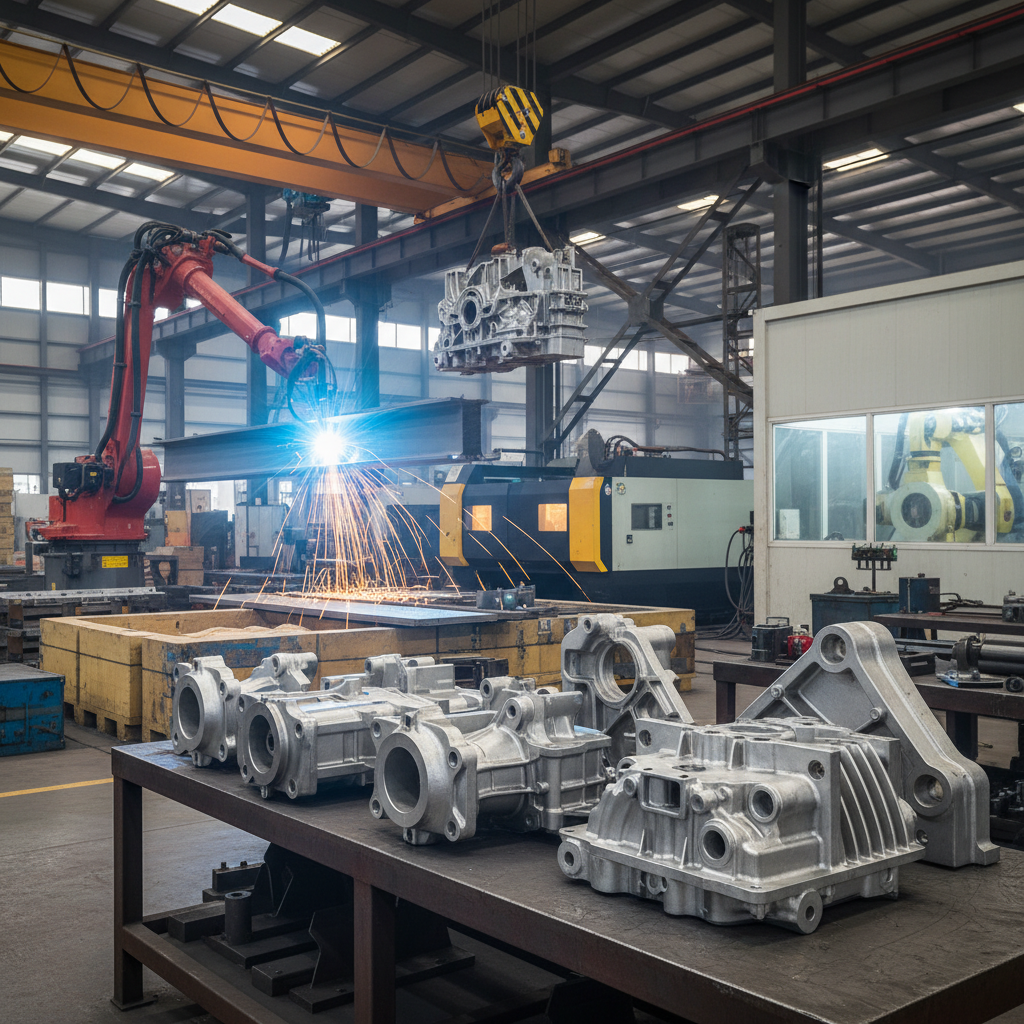
To maximize this efficiency, companies like Baoding Hairun Machinery Equipment Trading Co., Ltd. integrate CNC machining and general machining directly into the workflow. This hybrid approach allows for the mass-production speed of die casting while achieving the micron-level precision required for critical mating surfaces or threaded holes.
Evaluating the suitability of different casting methods requires a qualitative scoring model. When analyzing products made from die casting, we look at indices such as dimensional stability, surface smoothness, and production scalability.
The following index provides a conceptual comparison of die casting against other common methods, highlighting where die casting excels in high-volume industrial environments.
In the automotive sector, the demand for lightweight yet durable components has pushed die casting to the forefront. From engine brackets to transmission housings, the ability to cast complex internal galleries for fluid transport is critical. These parts are often used to transport, measure, and regulate various fluids, requiring a leak-proof density that only high-pressure casting can consistently provide.
Beyond the automotive field, die casting is essential for the machinery and pipeline industries. The process allows for the creation of valve bodies and pump housings that can withstand high pressures while maintaining a compact footprint. When coupled with stringent inspection reports—including X-ray and ultrasonic testing—these components ensure safety in critical infrastructure.
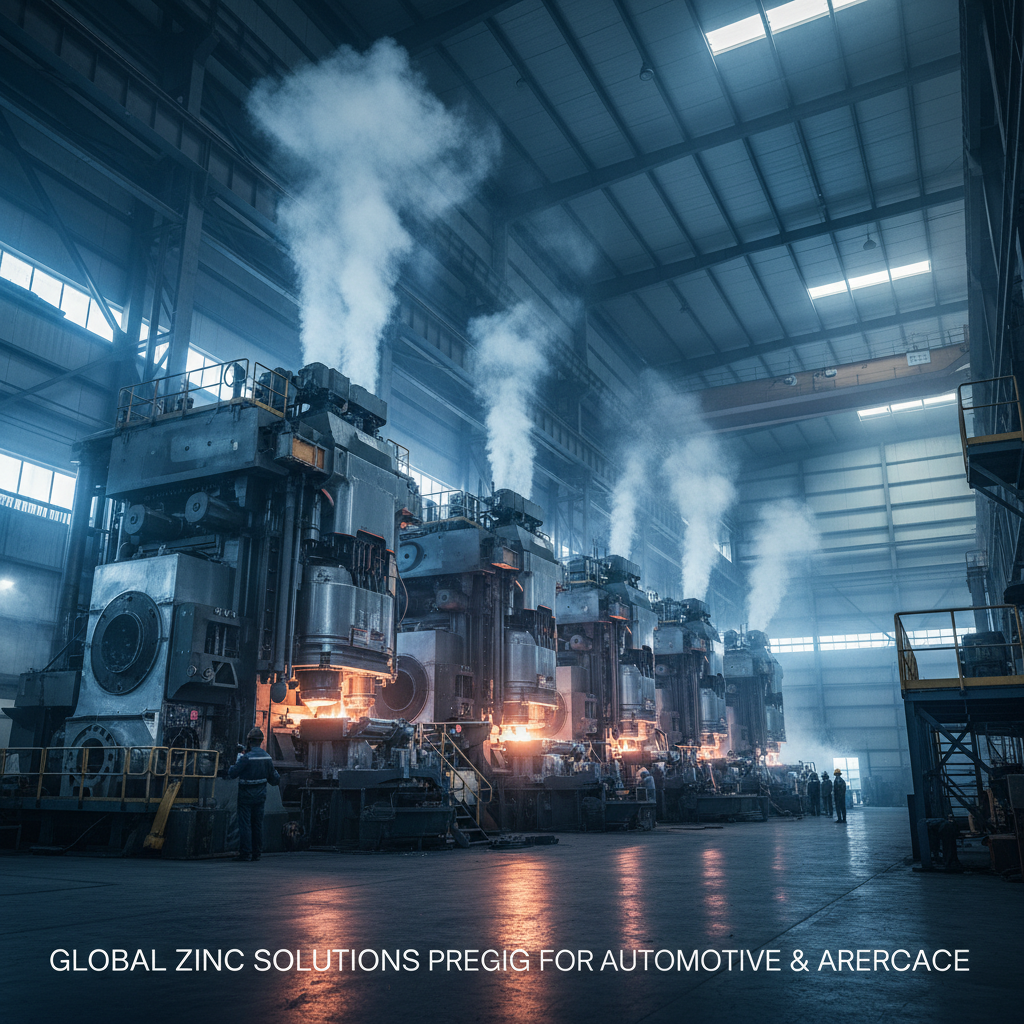
The industry is currently shifting toward "Giga-casting," where massive single-piece die-cast components replace dozens of smaller stamped and welded parts. This trend significantly reduces assembly time and eliminates the failure points associated with fasteners and welds, though it requires an unprecedented investment in massive pressing machinery.
Another critical evolution is the integration of simulation software to predict metal flow and thermal shrinkage before the mold is even cut. This "digital twin" approach reduces the number of trial productions, ensuring that the first physical sample is as close to the final specification as possible.
Furthermore, there is an increasing focus on sustainable sourcing and the use of recycled aluminum. The goal is to maintain the high mechanical properties of virgin alloys while reducing the carbon footprint of the smelting process, aligning industrial production with global environmental standards.
Choosing between sand casting, precision casting, and die casting depends on a set of non-negotiable technical constraints. While die casting offers the best speed, sand casting remains the only viable option for extremely large parts or materials with melting points too high for steel dies.
For components requiring the highest possible surface finish and intricate detail without any machining, investment (precision) casting is the preferred route. However, for a manufacturer evaluating a run of 10,000 automotive housings, the economic logic shifts decisively toward die casting.
The following table provides a structured decision framework for selecting the appropriate casting process based on typical industrial requirements.
| Factor | Die Casting | Sand Casting | Precision Casting | Centrifugal |
|---|---|---|---|---|
| Production Volume | Very High | Low to Medium | Medium | Medium |
| Tooling Cost | High | Low | Medium | Medium |
| Dimensional Tolerance | Tight | Loose | Very Tight | Moderate |
| Surface Quality | Smooth | Rough | Excellent | Moderate |
| Wall Thickness | Thin | Thick | Medium/Thin | Variable |
| Lead Time (Tooling) | Long | Short | Medium | Medium |
The primary difference lies in the mold material and the application of pressure. Sand casting uses a disposable sand mold, making it ideal for large, complex parts in low volumes. Die casting uses permanent steel molds and high pressure to force molten metal into the cavity. This results in much tighter tolerances, a smoother surface finish, and significantly faster production rates, which is why die casting is preferred for mass-produced automotive components like engine blocks or housing units.
The most common materials are aluminum, zinc, and magnesium alloys. Aluminum is favored for its lightweight properties and thermal conductivity. Zinc is chosen for its exceptional fluidity, which allows for the creation of very thin walls and high detail. Magnesium is the lightest of the three and is used when weight reduction is the absolute priority. The choice depends on the required strength, environmental exposure, and the desired final weight of the component.
Structural integrity is verified through a combination of process control and rigorous testing. During production, vacuum systems may be used to reduce air entrapment (porosity). Post-production, parts undergo dimension reports to verify tolerances. For critical safety components, non-destructive testing (NDT) such as X-ray, ultrasonic testing, and magnetic particle inspection is employed to detect internal voids or cracks that are not visible to the naked eye.
While die casting is designed for high volumes due to the high cost of steel molds, customization is possible. For low-volume needs, manufacturers often suggest starting with sand casting or precision casting for prototyping and trial production. Once the design is frozen and the volume increases, the transition to die casting occurs. Some suppliers also provide "permanent mold casting" as a middle ground between the flexibility of sand and the precision of die casting.
Die-cast aluminum can be treated in several ways depending on the application. For decorative or protective purposes, powder coating and plastic spraying are common. For industrial environments requiring high corrosion resistance, cathode electrophoresis (e-coating) is used. In cases where a metallic look is required with improved hardness, anodizing is the preferred method. These treatments ensure the part can withstand the specific chemicals or weather conditions of its operating environment.
Tooling is a significant upfront "sunk cost" in die casting. The steel dies must be precision-machined, which can be expensive. However, because the cycle time per part is so low and waste is minimized, the cost per unit drops dramatically as volume increases. In a run of 100 parts, the tooling cost makes the part expensive; in a run of 100,000 parts, the tooling cost is amortized to a negligible amount, making die casting the most cost-effective method for high-volume production.
The strategic adoption of products made from die casting allows manufacturers to bridge the gap between complex engineering designs and scalable commercial production. By carefully selecting the alloy and integrating secondary CNC machining, companies can produce components that meet the rigorous demands of the automotive, aerospace, and fluid control industries.
As the industry moves toward more sustainable materials and integrated "mega-castings," the focus will remain on reducing waste and increasing dimensional precision. For businesses seeking a reliable supply chain, partnering with a provider that offers end-to-end support—from supplier assessment to customs clearance—is the most effective way to navigate the complexities of international metal casting procurement.